

When to Buy Crypto and When to Sell | The Professional Timing Guide for 2026
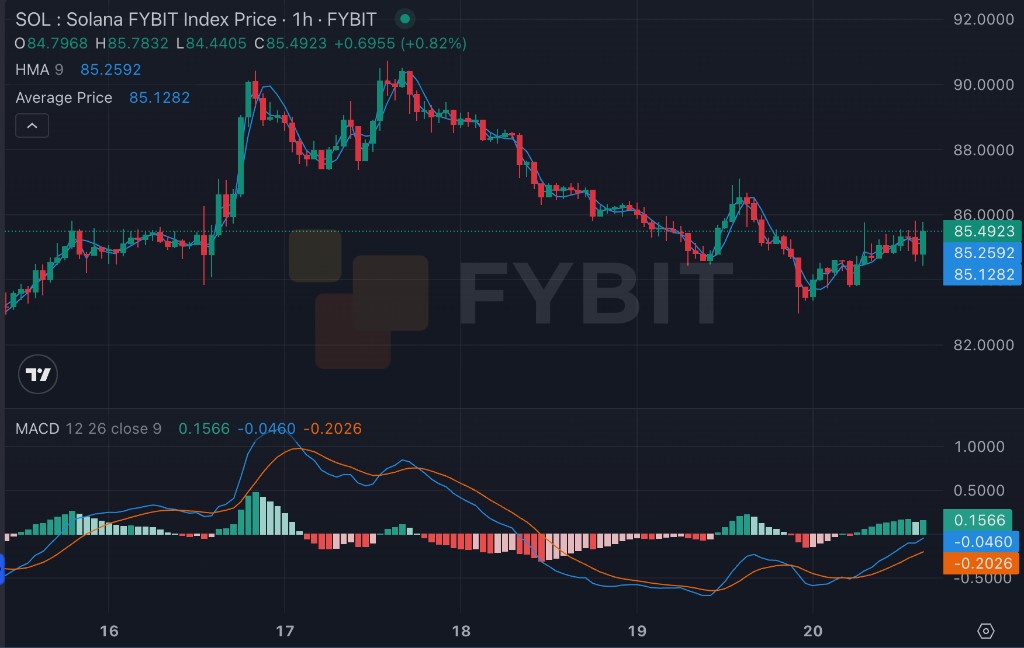
In the volatile landscape of May 2026, the difference between a legendary trade and a liquidated account comes down to a single skill: timing. Whether you are trading Bitcoin or high-beta AI tokens like TAO and NEAR, knowing when to buy crypto and when to sell is the foundation of long-term profitability.
At Fybit, we provide the 100x leverage tools to amplify your moves, but the "when" is a decision driven by data, psychology, and technical precision.
Part 1: When to Buy Crypto
Buying is not about catching a "gut feeling" - it is about identifying high-probability zones where the risk-to-reward ratio is in your favor.
1. Technical "Floor" Signals
Professional traders look for confluence - when multiple indicators point to the same entry.
- Support Retests: Buy when the price bounces off a long-term support level that has held multiple times.
- Oversold RSI: On the daily or 4-hour chart, an RSI (Relative Strength Index) below 30 often suggests the selling pressure is exhausted.
- MACD Bullish Crossover: Look for the MACD line to cross above the signal line on a significant timeframe.
2. Market Sentiment: The "Fear" Window
Counter-intuitively, the best time to buy is often when the market feels the most "dangerous."
- Fear & Greed Index: When the index hits "Extreme Fear" (below 20), historical data suggests a local bottom is near.
- The "Blood in the Streets" Rule: If a major narrative (like the 2026 AI sector) sees a sudden 20% flush without a fundamental change in tech, it is often a prime entry for a leverage scalp.
Part 2: When to Sell Crypto
Selling is harder than buying because it requires fighting the "Greed" that tells you the price will go up forever.
1. Target-Based Selling
Never enter a trade without a pre-defined exit.
- Resistance Levels: Sell as the price approaches a major historical resistance zone or an All-Time High (ATH).
- The 2:1 Ratio: Aim for a profit target that is at least twice your potential loss.
2. Technical "Ceiling" Signals
- Bearish Divergence: If the price makes a new high but the RSI makes a lower high, the trend is losing steam. Sell.
- Parabolic Blow-off Top: If the price verticality becomes unsustainable (e.g., a 45° angle turns into a 90° spike), it is time to exit or at least move your stop-loss into profit.
Buying vs. Selling Comparison (May 2026 Context)
| Signal | Buy Indicator | Sell Indicator |
|---|---|---|
| Price Action | Bounce off Support | Rejection at Resistance |
| RSI (Daily) | Below 30 (Oversold) | Above 70 (Overbought) |
| Sentiment | Extreme Fear / Panic | Extreme Greed / Euphoria |
| Volume | Increasing on the bounce | Decreasing on the rally |
The Secret of High-Leverage Timing
When you are using 100x leverage on Fybit, the "when" becomes even more granular. You aren't just looking for the day to buy; you are looking for the minute.
The "3-5-7" Discipline
To survive the timing game, apply our core risk protocol:
- 3% Risk: Never risk more than 3% of your account on a single entry's timing.
- 5% Daily Stop: If your timing is off and you lose 5% of your total balance today, walk away. The market will be there tomorrow.
- 7% Weekly Review: If your timing fails for 7% of your balance in a week, pause and re-analyze your strategy.
Calculating the Exit
Before you click "Buy," know your math. Use our PnL Meaning in Crypto Trading guide to calculate exactly where your liquidation point sits. At 100x, your timing must be precise within a 1% price window.
Conclusion: Precision is Profit
Mastering when to buy crypto and when to sell is an ongoing process of refining your technical analysis and emotional control. In the fast-moving markets of 2026, there is no room for hesitation.
Ready to time the next move?
- Check the Live Crypto Charts Free 2026 for current support levels.
- Make a quick Crypto Deposit to prepare your capital.
- Enter the Crypto Futures Trading terminal and execute your strategy with 100x precision.
The market never sleeps, but it does leave clues. Use them.
Disclaimer: Trading with high leverage involves significant risk. This guide is for informational purposes and does not constitute financial advice.